The Strategic Value of Transformational Tools in Modern Organizations.
Modern organizations operate in environments defined by volatility, complexity, and accelerated change. In this context, the adoption of transformational tools—digital platforms, analytical frameworks, and structured methodologies—has become essential for strengthening reliability, operational excellence, and institutional learning. This article explores the strategic value of these tools, emphasizing their role in decision‑making, knowledge transfer, and cultural development. By integrating structured processes with intuitive, user‑centered technologies, organizations can enhance their capacity to anticipate failures, optimize performance, and cultivate a culture of continuous improvement.
Keywords
Operational Excellence; Reliability; Digital Transformation; Organizational Learning; Decision‑Making; Knowledge Transfer; Continuous Improvement.
Introduction
Organizations today face unprecedented challenges: global competition, rapid technological evolution, and increasing expectations for safety, quality, and performance. In this environment, tools that support analysis, communication, and structured decision‑making are no longer optional—they are strategic assets.
Transformational tools, whether digital platforms or methodological frameworks, enable organizations to convert information into action, uncertainty into clarity, and isolated knowledge into institutional capability. Their value lies not only in automation or efficiency but in their ability to elevate human judgment and strengthen organizational culture.
The Role of Transformational Tools in Organizational Performance
1. Enhancing Reliability and Risk Management
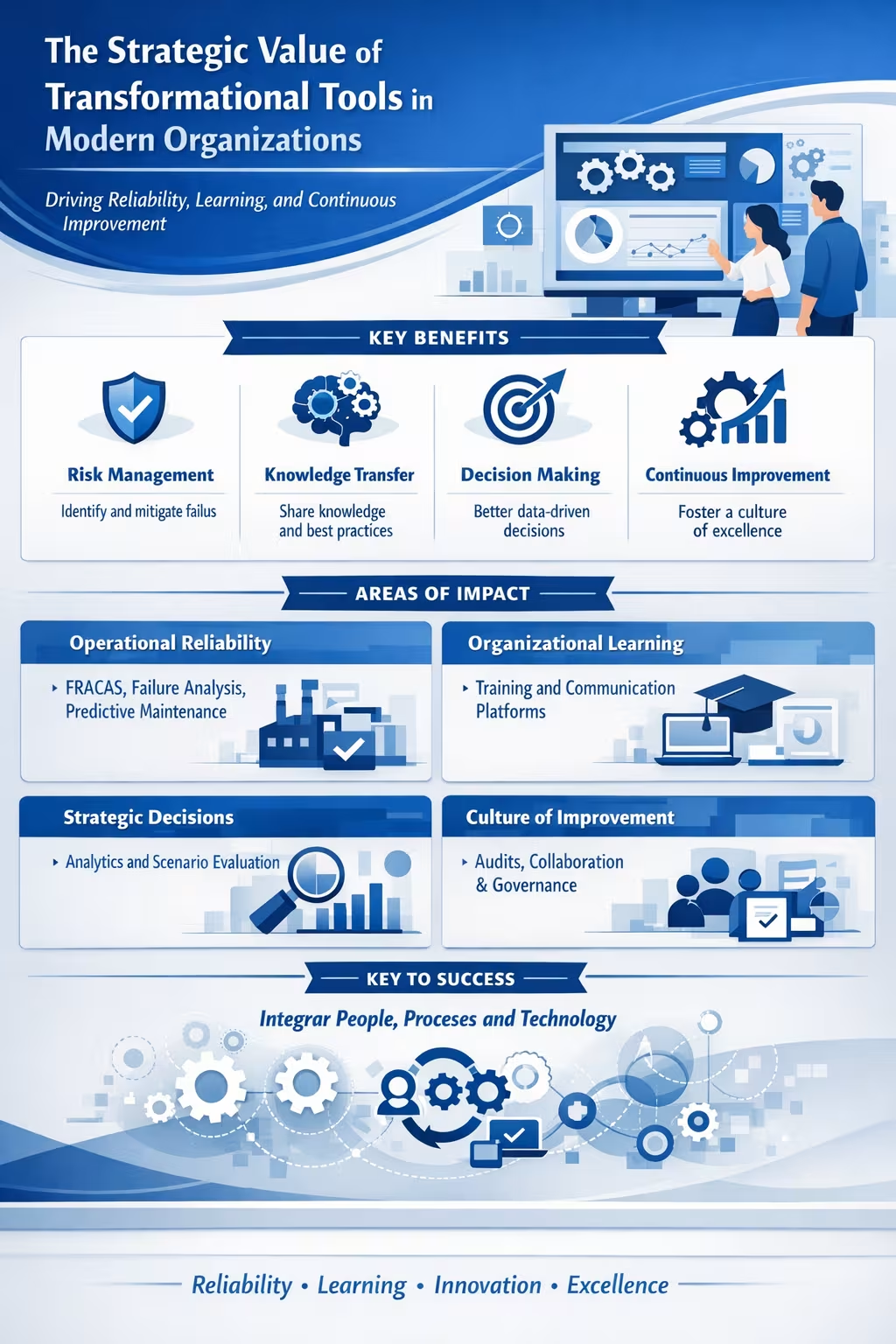
Reliability‑centered tools—such as FRACAS, RCA systems, and predictive analytics—provide structured mechanisms to identify, analyze, and mitigate failures. These tools help organizations:
- Detect patterns and emerging risks
- Prioritize interventions based on impact
- Strengthen asset integrity and operational continuity
By standardizing the way failures are captured and analyzed, organizations build a consistent, data‑driven foundation for decision‑making.
2. Accelerating Knowledge Transfer
Modern organizations depend on the speed and quality of knowledge flow. Transformational tools support this by:
- Capturing tacit knowledge from experts
- Structuring information into reusable modules
- Enabling bilingual or multicultural communication
- Reducing variability in training and execution
Platforms that integrate multimedia, modular content, and standardized frameworks amplify institutional learning and reduce dependency on individual expertise.
3. Strengthening Decision‑Making
Tools that combine analytics, visualization, and structured methodologies empower leaders to make decisions with greater clarity and confidence. They:
- Provide real‑time insights
- Highlight causal relationships
- Support scenario evaluation
- Reduce cognitive bias
When decision‑making becomes systematic, organizations gain agility and resilience.
4. Building a Culture of Continuous Improvement
Transformational tools reinforce behaviors that sustain excellence. They:
- Promote transparency and accountability
- Encourage cross‑functional collaboration
- Facilitate audits and governance
- Align teams around shared objectives
Culture is shaped by what organizations consistently do. Tools that standardize excellence help institutionalize it.
Discussion
The true power of transformational tools emerges when they are integrated into a coherent ecosystem—one that connects people, processes, and technology. This ecosystem becomes a strategic differentiator, enabling organizations to:
- Scale best practices
- Reduce operational variability
- Strengthen compliance and governance
- Foster innovation and adaptability
In bilingual or multicultural environments, these tools also bridge linguistic and cultural gaps, ensuring conceptual equivalence and universal clarity.
Conclusion
Transformational tools are catalysts for organizational evolution. They enhance reliability, accelerate learning, and elevate decision‑making. More importantly, they help build cultures where excellence is not an aspiration but a daily practice. Organizations that embrace these tools position themselves to thrive in complexity, lead with confidence, and create lasting institutional value.
References (APA 7th Edition)
- Dhillon, B. S. (2016). Engineering systems reliability, safety, and maintenance: An integrated approach. CRC Press.
- Moubray, J. (1997). Reliability-centered maintenance (2nd ed.). Industrial Press.
- Reason, J. (2008). The human contribution: Unsafe acts, accidents and heroic recoveries. CRC Press.
- Senge, P. M. (2006). The fifth discipline: The art and practice of the learning organization. Doubleday.
- Smith, A. M., & Hinchcliffe, G. R. (2004). RCM—Gateway to world class maintenance. Elsevier.
- Taleb, N. N. (2012). Antifragile: Things that gain from disorder. Random House.