🌱 When Talent Is Not Enough: Vulnerability, Resilience, and Educational Opportunities
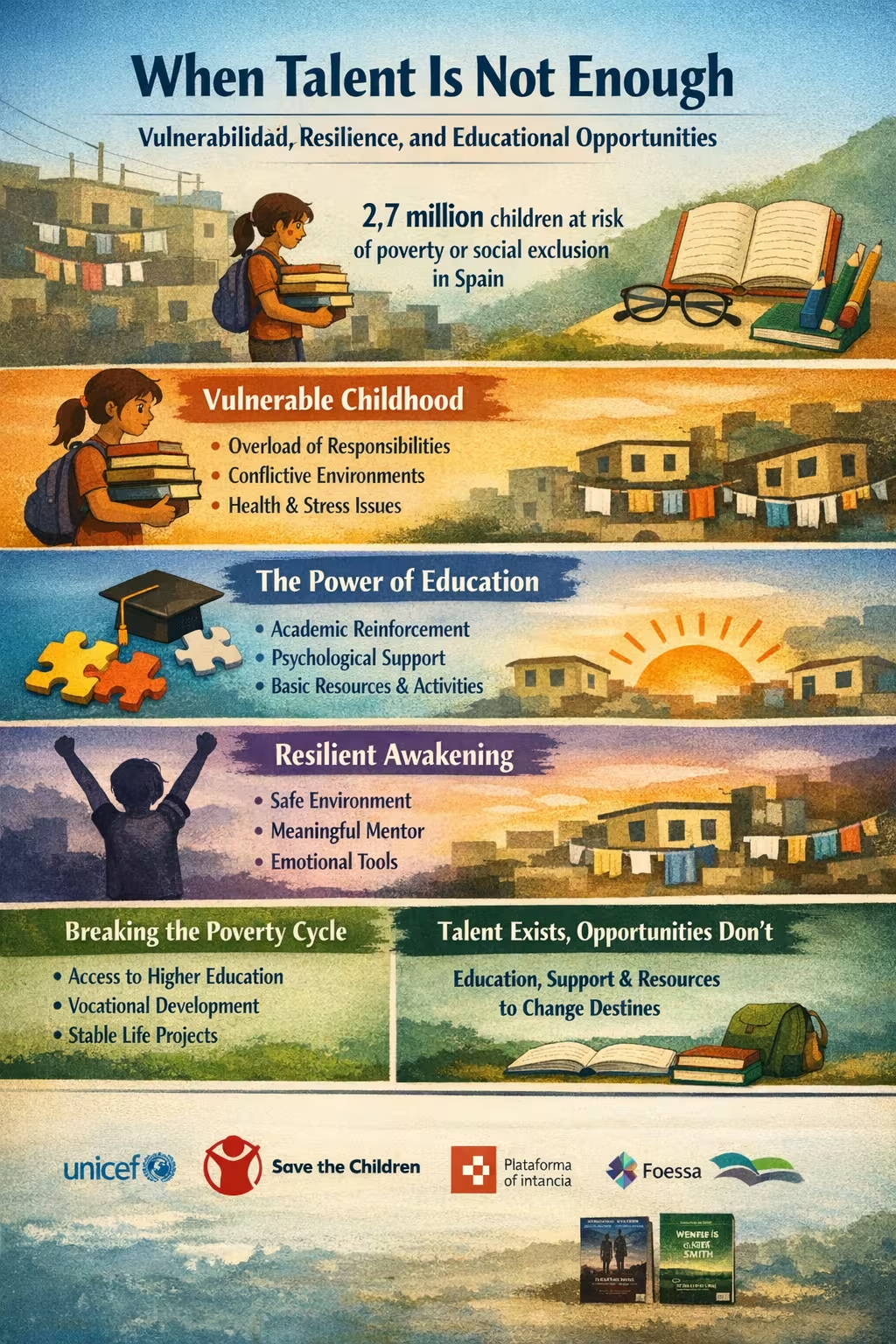
Having exceptional talent does not guarantee the ability to build a dignified future. In many vulnerable environments, thousands of children grow up trapped in a cycle of material deprivation, emotional instability, and structural limitations that condition their development. Spain registers nearly 2.7 million children and adolescents at risk of poverty or social exclusion, a figure that reveals the magnitude of a problem that transcends the individual and is embedded in the structure of inequality itself.
🌍 Vulnerable Childhood: Growing Up Too Soon
Research shows that persistent poverty, family instability, and exposure to high-conflict environments generate processes of premature adultification. Children assume responsibilities inappropriate for their age, develop emotional survival mechanisms, and live under chronic stress that affects their physical, cognitive, and psychological health.
Common factors include:
- Overload of domestic and family responsibilities
- Lack of safe spaces for leisure and emotional development
- Schools located in vulnerable areas, with high rates of absenteeism and academic failure
- Somatization of stress, manifesting as muscle pain, sleep disorders, anxiety, or depression
Scientific evidence confirms that prolonged exposure to these conditions affects memory, concentration, and emotional self-regulation—key elements for academic performance and life planning.
🎓 The Transformative Role of Education and Psychological Support
Escaping the poverty cycle does not depend solely on individual effort. Research in social and educational sciences demonstrates that comprehensive socio-educational support is crucial for children to develop their potential.
The most effective support programs integrate:
- Personalized educational reinforcement
- Psychological care based on cognitive-behavioral approaches
- Access to basic resources such as food, hygiene, glasses, hearing aids, and school supplies
- Participation in cultural, sports, and summer activities that broaden horizons and strengthen social skills
- Family-oriented workshops to improve coexistence and parenting strategies
These elements help children not only improve academically but also strengthen their self-esteem, coping capacity, and vision for the future.
💡 Resilience: The Turning Point
Resilience is not innate—it is built when a child finds:
- A safe environment
- A significant adult who acts as a mentor
- Tools to reinterpret experiences and manage emotions
The cognitive-behavioral approach has proven especially effective in helping young people identify distorted thoughts, reduce fear of failure, and develop more realistic and healthy strategies to face challenges.
When these elements align, a phenomenon described by various authors as a “resilient awakening” occurs—a moment when the person recognizes their own worth, understands their capabilities, and begins to project themselves toward a possible future.
🚀 Breaking the Cycle: Education, Support, and Opportunity
Documented cases show that when a talented child receives psychological support, educational guidance, and access to basic resources, their life trajectory can change dramatically. Many achieve:
- Access to higher education
- Vocations linked to social work, education, or mental health
- Roles as positive references for other young people in their communities
- Stable and emotionally healthy life projects
The evidence is clear: Talent exists everywhere; opportunities do not. Therefore, socio-educational intervention programs remain essential tools to ensure that inequality does not determine the destiny of millions of children and adolescents.
📚 Conclusion
Talent alone is not enough to escape poverty. It requires an ecosystem of support that combines quality education, emotional guidance, material resources, and meaningful adults capable of guiding, sustaining, and believing in each child’s potential. Where these elements converge, vulnerability ceases to be a sentence and becomes a starting point for personal and social transformation.
📖 References (APA)
- Fundación Foessa. (2022). Report on exclusion and social development in Spain. Cáritas Española.
- Ministry of Social Rights and Agenda 2030. (2023). National Strategy for the Prevention and Fight Against Child Poverty.
- Plataforma de Infancia. (2023). The Situation of Childhood in Spain: Indicators of Poverty and Social Exclusion.
- Save the Children. (2021). Child Poverty and Educational Inequality in Spain.
- UNICEF Spain. (2022). Equity for Children: The Impact of Poverty on Child Development.
- Werner, E. E., & Smith, R. S. (2001). Journeys from Childhood to Midlife: Risk, Resilience, and Recovery. Cornell University Press.
- Zimmerman, M. A. (2013). Resilience theory: A strengths-based approach to research and practice. Social Work Research, 37(3), 197–201.
Comments