Fire Protection Systems in Industrial Facilities: Operational, Inspection, and Maintenance Requirements
Abstract
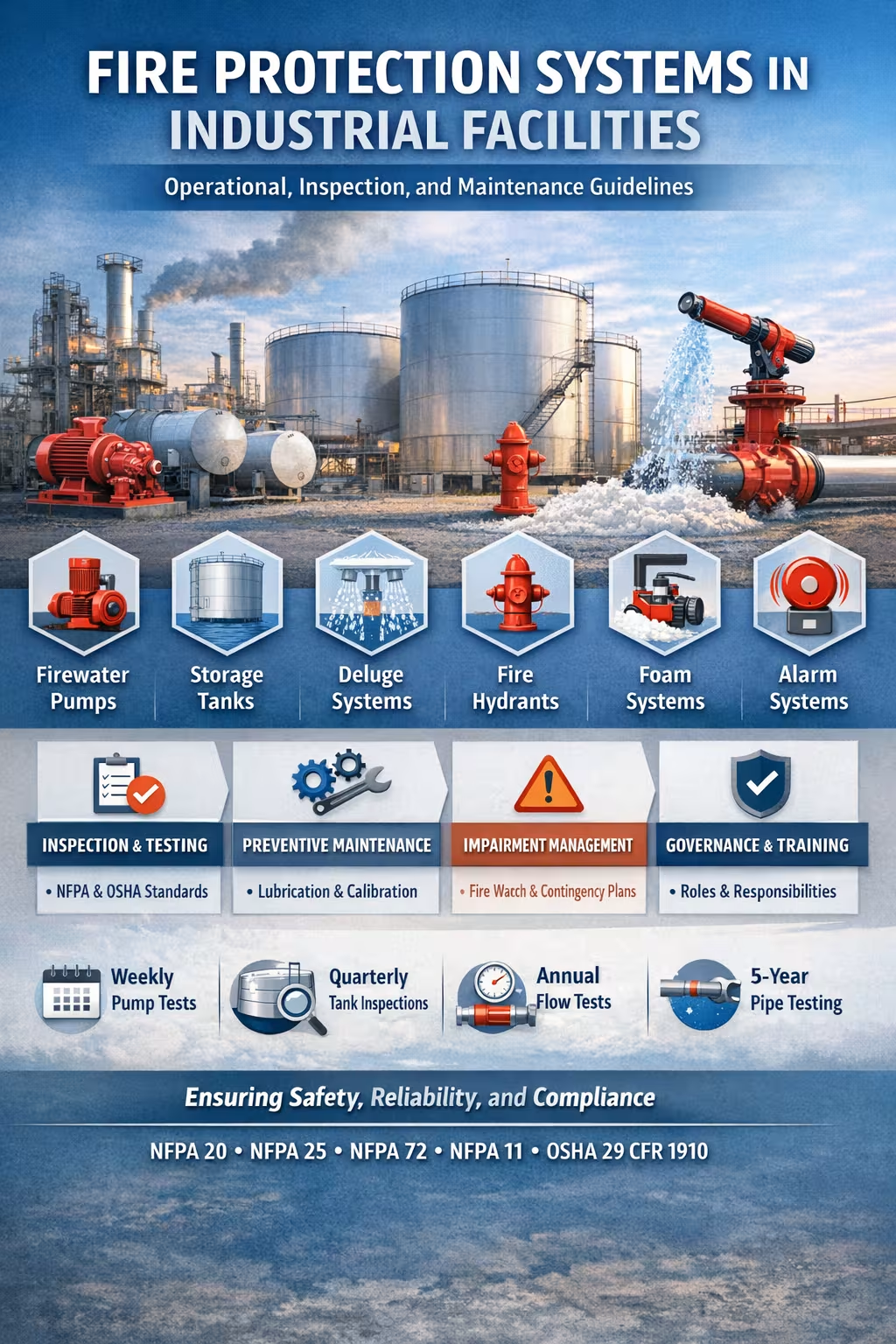
Industrial facilities handling hazardous materials rely on robust fire protection systems to ensure personnel safety, asset integrity, and operational continuity. This article synthesizes best practices and standardized requirements for the operation, inspection, testing, and maintenance of firewater systems, fire detection systems, deluge systems, foam systems, hydrants, monitors, and associated infrastructure. Emphasis is placed on governance, impairment management, preventive maintenance, and compliance with internationally recognized fire protection standards.
Keywords: firewater systems, deluge systems, industrial safety, NFPA standards, fire protection governance, inspection and testing.
1. Introduction
Fire protection systems are critical components of industrial risk management. These systems—ranging from firewater pumps to detection networks—must remain continuously available and fully functional to mitigate fires, vapor releases, and other emergency scenarios. Ensuring system reliability requires structured procedures for inspection, testing, maintenance, and impairment control, aligned with recognized fire protection standards such as NFPA 20, NFPA 25, NFPA 72, and NFPA 11.
The following sections present a comprehensive framework for managing fire protection systems in complex industrial environments, based on operational practices and procedural requirements extracted from the reference document .
2. Core Components of Industrial Fire Protection Systems
2.1 Firewater Pumps
Firewater pumps—electric or diesel-driven—provide the hydraulic backbone of the firewater distribution network. Their reliability depends on:
- Weekly inspections of pump houses, electrical systems, diesel engines, and mechanical components.
- Weekly operational tests:
- Electric pumps: minimum 10 minutes
- Diesel pumps: minimum 30 minutes
- Annual performance testing to verify flow and pressure characteristics.
- Preventive maintenance including lubrication, electrical testing, calibration of controllers, and inspection of relief valves.
A pump is considered in service when it can operate reliably for extended periods and, if applicable, remains in automatic mode.
2.2 Firewater Storage Tanks and Reservoirs
Storage tanks and reservoirs ensure adequate water supply for emergency response.
- Quarterly external inspections.
- Internal inspections every 3–5 years depending on coating.
- Semi-annual testing of level alarms (high, low, and low-low).
- Reservoir soundings every 5 years and dredging when capacity is reduced.
- Annual cleaning of pump suction screens.
Maintaining full operating levels is mandatory to meet firewater demand for worst-case scenarios.
2.3 Fire Hydrants and Standpipe Systems
Hydrants and manual dry standpipes support firefighting operations.
- Semi-annual inspections.
- Semi-annual flushing of hydrants.
- Five-year flow and pressure testing for dry standpipe systems.
- Lubrication of stems, caps, and threads during inspections.
2.4 Fire Monitors and Foam Carts
Monitors provide high-capacity water or foam streams for equipment cooling and fire suppression.
- Semi-annual inspections and flushing.
- Monthly inspections for foam carts.
- Preventive maintenance includes lubrication of nozzles, stems, and swivel mechanisms.
2.5 Water Cannon Systems for Hazardous Units
Specialized water cannon systems protect units handling hazardous chemicals.
- Weekly inspections.
- Weekly flow tests of at least one cannon, including remote control verification.
- Quarterly preventive maintenance and annual lubrication.
- Strainer cleaning: quarterly for pilot strainers, annually for main strainers.
Systems must remain fully enabled, with detectors, valves, and controls operational at all times.
2.6 Deluge and Sprinkler Systems
Deluge and sprinkler systems provide rapid cooling and suppression.
- Monthly valve inspections and quarterly system inspections.
- Annual flow and acceptance testing to verify discharge patterns.
- Five-year valve maintenance.
- Preventive maintenance per NFPA 25 and manufacturer guidelines.
2.7 Fire Detection and Alarm Systems
Detection systems include building alarms, UV/IR flame detectors, and clean agent systems.
- Semi-annual inspections.
- Annual functional testing.
- Quarterly cleaning of detector lenses.
- Preventive maintenance per NFPA 72, NFPA 12A, NFPA 17A, and NFPA 2001.
2.8 Tank Foam Systems
Foam systems protect storage tanks and flammable liquid containment areas.
- Annual inspections of piping, fittings, hangers, and supports.
- Semi-annual inspections of foam chambers and fixed foam makers.
- Five-year flushing of foam piping.
- Preventive maintenance per NFPA 11.
3. Governance and Responsibilities
Effective fire protection requires clear organizational roles:
- Fire Protection Specialists oversee inspections, testing, maintenance coordination, and system audits.
- Operations personnel conduct routine inspections, monitor equipment status, and initiate variance reports when systems are impaired.
- Maintenance teams perform repairs, lubrication, electrical work, and mechanical servicing.
- Emergency response teams manage impairments, authorize temporary equipment, and support testing.
Governance ensures compliance with standards and maintains system readiness.
4. Impairment Management
When a system or component is taken out of service:
- A formal impairment report is initiated.
- Supervisors and emergency response personnel are notified immediately.
- A technical assessment is conducted within 2–4 hours.
- A Fire Protection Contingency Plan is developed, which may include:
- Fire watches
- Temporary firewater connections
- Suspension of hazardous work
- Deployment of portable pumps
- Repairs must begin promptly, typically within 12 hours.
Impairment management ensures continuous protection even during maintenance or failures.
5. Non-Emergency Use of Firewater Systems
Firewater systems are not intended for routine utility use.
- Permanent non-emergency connections require formal approval and strict conditions.
- Temporary non-emergency use requires a permit, limited to 90 days.
- Firewater use must cease immediately during plant alarms.
- Fire pumps must not start for non-emergency purposes, in accordance with NFPA 20.
6. System Integrity and Accessibility
To maintain operational readiness:
- A 3-foot clearance must be maintained around hydrants, monitors, and foam connections.
- Firewater valves must remain sealed open.
- Aboveground piping must be inspected annually; underground piping tested every 5 years.
- Freeze protection measures must be implemented during cold weather.
7. Conclusions
Fire protection systems in industrial facilities require disciplined management, rigorous inspection, and adherence to recognized standards. Ensuring system reliability involves not only technical maintenance but also strong governance, rapid impairment response, and continuous monitoring. Implementing these practices enhances safety, protects assets, and ensures operational resilience.
References
(All references are standards or regulatory frameworks; no companies are named.)
- NFPA 11 – Standard for Low-, Medium-, and High-Expansion Foam.
- NFPA 12A – Standard on Halon 1301 Fire Extinguishing Systems.
- NFPA 17A – Standard for Wet Chemical Extinguishing Systems.
- NFPA 20 – Standard for the Installation of Stationary Pumps for Fire Protection.
- NFPA 22 – Standard for Water Tanks for Private Fire Protection.
- NFPA 24 – Standard for Private Fire Service Mains and Appurtenances.
- NFPA 25 – Standard for Inspection, Testing, and Maintenance of Water-Based Fire Protection Systems.
- NFPA 72 – National Fire Alarm and Signaling Code.
- NFPA 2001 – Standard on Clean Agent Fire Extinguishing Systems.
- OSHA 29 CFR 1910 – General Industry Standards.
- Texas Insurance Code Article 5.43-3 – Fire Protection Sprinkler Systems and Rules.
Comments