🌿 THE ART OF CALMING YOURSELF: A Mental Ritual to Restore Inner Peace
With scientific grounding and APA references
Life often moves faster than our emotional capacity to process it. Between responsibilities, uncertainty, and internal pressure, it’s natural to feel overwhelmed. Yet, there are brief, accessible, and scientifically supported practices that can help you regain calm, regulate your emotions, and strengthen your resilience.
This article brings together mental and behavioral exercises validated by contemporary psychology, neuroscience, and clinical research.
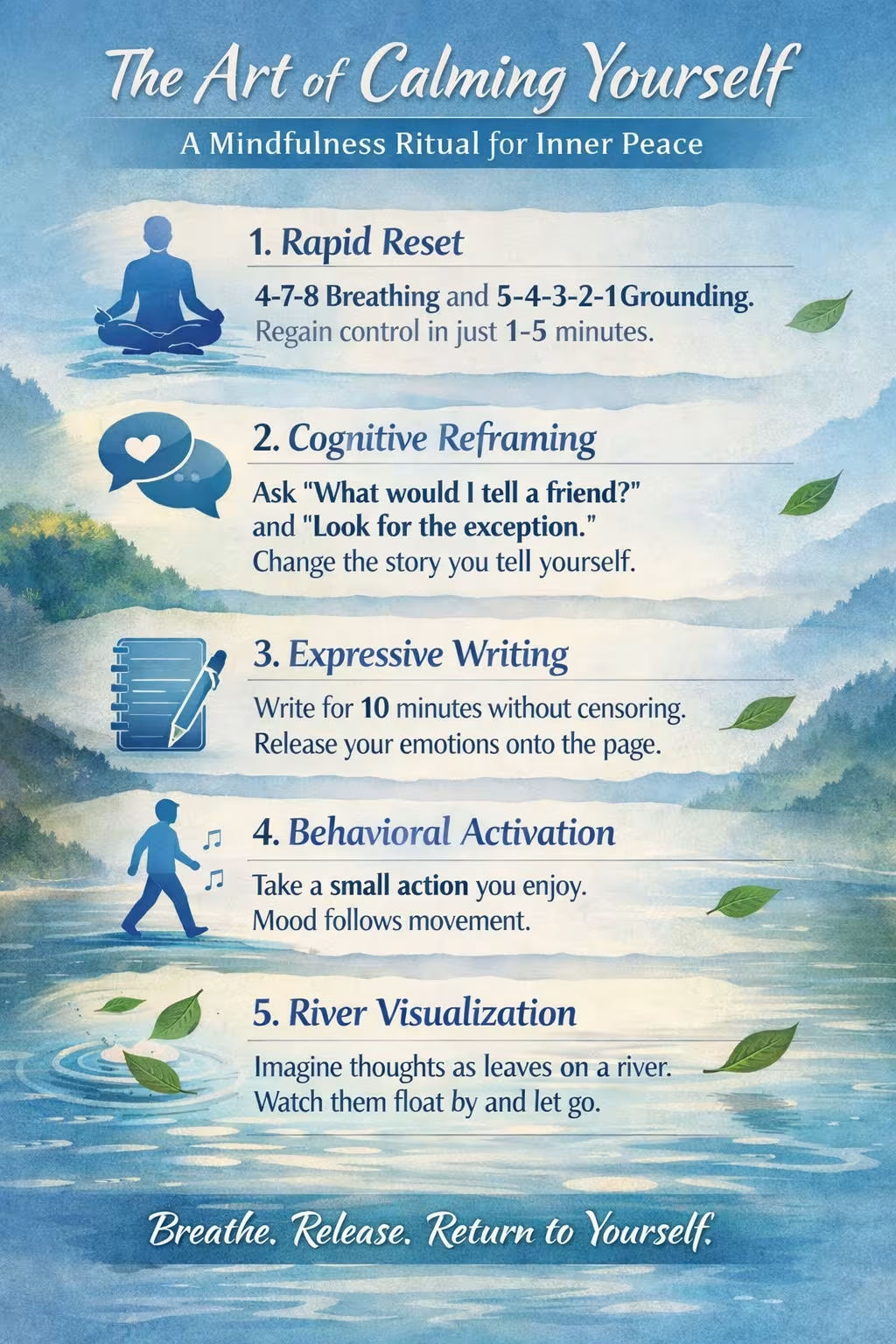
🔄 1. Rapid Reset: From Turbulence to Serenity (1–5 minutes)
When emotions intensify, the body enters a state of alert. Regulating your breathing and reconnecting with your senses helps deactivate that response.
4‑7‑8 Breathing
Inhale for 4 seconds, hold for 7, exhale for 8.
This pattern stimulates the parasympathetic nervous system, reducing physiological arousal and anxiety.
Scientific support:
Slow, diaphragmatic breathing has been shown to reduce heart rate, improve emotional regulation, and decrease stress (Ma et al., 2017).
5‑4‑3‑2‑1 Grounding
Identify 5 things you see, 4 you can touch, 3 you hear, 2 you smell, and 1 you taste.
This technique interrupts mental rumination and anchors you in the present moment.
Scientific support:
Grounding techniques are widely used in anxiety and trauma therapies to reduce hyperarousal and enhance mindfulness (Najmi et al., 2015).
🧠 2. Cognitive Reframing: Changing the Story You Tell Yourself
How we interpret our experiences directly shapes how we feel. Cognitive reframing helps soften self‑criticism and create more balanced perspectives.
“What would I tell a friend?”
Self‑compassion reduces emotional intensity and increases resilience.
Scientific support:
Kristin Neff (2003) found that self‑compassion lowers anxiety and self‑criticism while promoting emotional well‑being.
Look for the exception
Ask yourself: Was there even a small moment today when I felt slightly better?
This breaks emotional generalization and opens space for hope.
Scientific support:
Cognitive reframing is a core technique in Cognitive Behavioral Therapy (CBT), with strong evidence for reducing depressive and anxious symptoms (Beck, 2011).
✍️ 3. Expressive Writing: Releasing What Weighs You Down
Write for 10 minutes without stopping or censoring yourself.
This practice helps you process emotions, clarify thoughts, and reduce internal tension.
Scientific support:
James Pennebaker (1997) demonstrated that expressive writing improves mood, strengthens the immune system, and reduces stress.
🎯 4. Behavioral Activation: When Action Rescues Mood
We often wait to feel better before acting, but psychology shows the opposite: action often precedes mood.
Choose one small action:
- take a short walk
- tidy a small area
- take a warm shower
- listen to a calming song
- prepare a drink you enjoy
You don’t need motivation—just a micro‑step.
That small movement can become the switch that turns everything else on.
Scientific support:
Behavioral activation is one of the most effective interventions for improving mood, especially in mild to moderate depression (Martell et al., 2010).
🌊 5. River Visualization: Letting Go Without Fighting
Close your eyes and imagine a calm river.
Each thought is a leaf floating by. You don’t grab it, analyze it, or push it away. You simply watch it pass.
Scientific support:
This technique comes from Acceptance and Commitment Therapy (ACT), which teaches psychological distancing from thoughts, reducing their emotional impact (Hayes et al., 2012).
🌟 A Final Message for You
You don’t need to have everything figured out to begin feeling better.
You don’t need to be at your best to take a step toward calm.
Serenity is a habit built through small acts of self‑care.
Every breath, every written word, every tiny action is a reminder that you can return to yourself whenever you need to.
📚 References (APA 7th Edition)
- Beck, J. S. (2011). Cognitive behavior therapy: Basics and beyond (2nd ed.). Guilford Press.
- Hayes, S. C., Strosahl, K. D., & Wilson, K. G. (2012). Acceptance and commitment therapy: The process and practice of mindful change (2nd ed.). Guilford Press.
- Ma, X., Yue, Z. Q., Gong, Z. Q., Zhang, H., Duan, N. Y., Shi, Y. T., Wei, G. X., & Li, Y. F. (2017). The effect of diaphragmatic breathing on attention, negative affect and stress in healthy adults. Frontiers in Psychology, 8, 874.
- Martell, C. R., Dimidjian, S., & Herman‑Dunn, R. (2010). Behavioral activation for depression: A clinician’s guide. Guilford Press.
- Najmi, S., Riemann, B. C., & Wegner, D. M. (2015). Managing unwanted intrusive thoughts in anxiety disorders. Cognitive and Behavioral Practice, 22(1), 3–12.
- Neff, K. D. (2003). Self‑compassion: An alternative conceptualization of a healthy attitude toward oneself. Self and Identity, 2(2), 85–101.
- Pennebaker, J. W. (1997). Writing about emotional experiences as a therapeutic process. Psychological Science, 8(3), 162–166.
Comments