Stakeholder Analysis: Foundations, Evolution, Methodology, and Organizational Applications
Abstract
Stakeholder analysis is a strategic tool that enables organizations to identify, understand, and manage the actors who influence or are affected by a project, process, policy, or decision. Originating in management theory during the 1970s, it has evolved into a cornerstone of modern governance, project management, sustainability, and operational excellence. This article explores its definition, historical development, fields of application, detailed methodology, advantages, limitations, and key bibliographic references.
1. What Is Stakeholder Analysis?
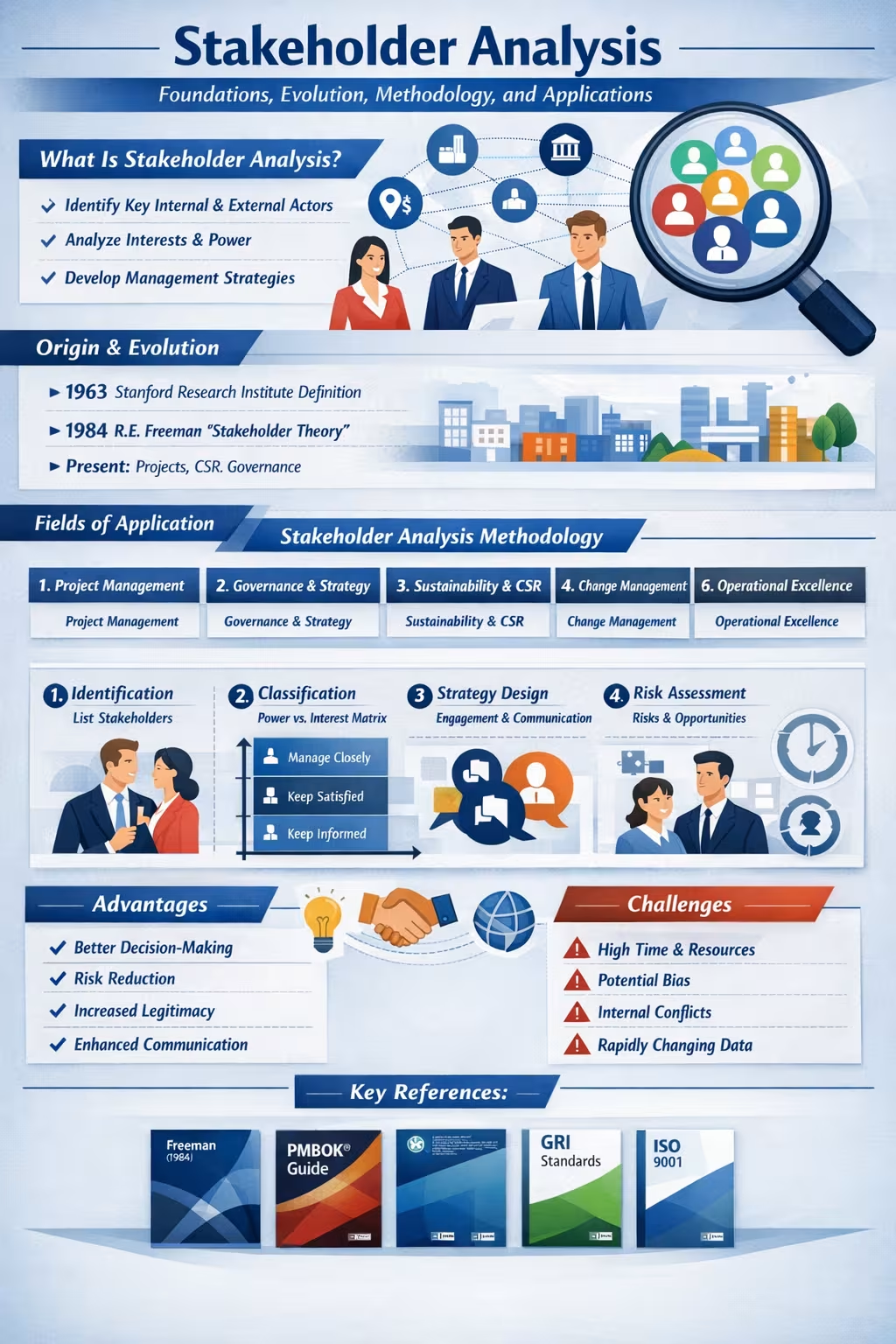
Stakeholder Analysis is a systematic process designed to:
- Identify internal and external actors who influence or are affected by an initiative.
- Understand their interests, expectations, levels of power, and influence.
- Design appropriate management, communication, and engagement strategies.
Its central purpose is to align interests, anticipate social and organizational risks, and increase the likelihood of success in projects and decisions.
2. Origin and Historical Evolution
The term stakeholder was formally introduced in 1963 by the Stanford Research Institute, defining stakeholders as “those groups without whose support the organization would cease to exist.”
Subsequent milestones include:
- 1970s–1980s: R. Edward Freeman consolidated the Stakeholder Theory in Strategic Management: A Stakeholder Approach (1984), emphasizing that organizations must manage relationships, not just resources.
- 1990s: The concept expanded into project management, public policy, and corporate social responsibility.
- 2000s–Present: It became a standard in sustainability (GRI), governance, change management, and operational excellence frameworks.
Today, stakeholder analysis is a transversal discipline essential for legitimacy, informed decision-making, and sustainable organizational success.
3. Use and Fields of Application
3.1 Project Management
- Identification of key actors.
- Expectation management.
- Conflict prevention.
- Commitment assurance.
3.2 Governance and Strategy
- Corporate policy design.
- Organizational impact assessment.
- Reputation and legitimacy building.
3.3 Sustainability and Social Responsibility
- Community engagement.
- Transparency and accountability.
- Environmental and social impact evaluation.
3.4 Change Management
- Mapping resistance and support.
- Communication planning.
- Cultural alignment.
3.5 Operational Excellence
- Identification of critical process actors.
- Prioritization of needs.
- Integration with Lean, Six Sigma, and quality methodologies.
4. Detailed Methodology of Stakeholder Analysis
Step 1. Identification
List all internal and external stakeholders:
- Internal: executives, employees, departments, unions.
- External: customers, suppliers, regulators, communities, shareholders, media, NGOs.
Recommended techniques: brainstorming, document review, interviews, system analysis.
Step 2. Classification and Characterization
For each actor, document:
- Interests and expectations.
- Level of influence and power.
- Impact level.
- Attitude (supportive, neutral, opposed).
- Associated risks.
Step 3. Power–Interest Matrix
Use the classical matrix:
Influence
Interest
Recommended Strategy
High
High
Manage closely
High
Low
Keep satisfied
Low
High
Keep informed
Low
Low
Monitor
Step 4. Risk and Opportunity Assessment
Analyze:
- Social, political, operational, and reputational risks.
- Collaboration and legitimacy opportunities.
Step 5. Management Strategy Design
Examples include:
- Active participation: workshops, committees, co-creation.
- Structured communication: reports, meetings, newsletters.
- Negotiation: agreements, commitments, compensations.
- Monitoring: indicators, audits, surveys.
Step 6. Communication and Engagement Plan
Define:
- Key messages.
- Frequency and channels.
- Responsible parties.
- Effectiveness indicators.
Step 7. Monitoring and Updating
Review periodically, especially when:
- Scope changes occur.
- Political or regulatory shifts arise.
- Crises or conflicts emerge.
- Project evolution demands adaptation.
5. Advantages and Benefits
- Enhances decision-making quality.
- Reduces social, political, and operational risks.
- Increases acceptance and legitimacy.
- Strengthens strategic communication.
- Promotes transparency and governance.
- Anticipates conflicts and manages resistance.
- Aligns expectations and resources.
6. Limitations and Challenges
- Subjectivity if criteria are unclear.
- Requires time, resources, and analytical skills.
- May generate internal political tensions.
- Information can change rapidly.
- Risk of bias in prioritization.
- Poor management may increase resistance.
7. Conclusions
Stakeholder analysis is an essential tool for organizations seeking to manage projects, processes, and decisions with strategic vision, social legitimacy, and operational excellence. Its true value lies in its ability to integrate perspectives, anticipate risks, and build sustainable relationships. In today’s complex global environment, rigorous application of this methodology is a hallmark of organizational maturity and cultural strength.
8. Bibliographic References (APA)
- Freeman, R. E. (1984). Strategic Management: A Stakeholder Approach. Boston: Pitman.
- Mitchell, R., Agle, B., & Wood, D. (1997). Toward a theory of stakeholder identification and salience. Academy of Management Review, 22(4), 853–886.
- Clarkson, M. (1995). A stakeholder framework for analyzing and evaluating corporate social performance. Academy of Management Review, 20(1), 92–117.
- Bryson, J. (2004). What to do when stakeholders matter. Public Management Review, 6(1), 21–53.
- Project Management Institute. (2021). A Guide to the Project Management Body of Knowledge (PMBOK® Guide). PMI.
- Global Reporting Initiative. (2020). GRI Standards. GRI.
- ISO. (2015). ISO 9001:2015 Quality Management Systems — Requirements. International Organization for Standardization.
Comments