Protecting Yourself from Harassment and Discrimination in North Carolina: A Practical Guide for Legal and Personal Safety
Abstract
No one should feel harassed because of their ideology, country of origin, language ability, physical condition, or migration status. Yet these forms of hostility continue to affect many individuals, particularly immigrants and people facing linguistic or social barriers. In North Carolina, both state and federal laws provide mechanisms to protect individuals, document incidents, and activate formal processes without increasing personal risk. This article offers a practical guide to understanding your rights, identifying harassment, and preparing for a solid legal defense.
1. Introduction
Harassment based on ideology, nationality, language, or personal characteristics is a form of discrimination that undermines dignity, emotional stability, and personal safety. In North Carolina, individuals—regardless of immigration status—are protected under multiple legal frameworks designed to prevent intimidation, threats, and discriminatory behavior.
The goal is not to “fight back” impulsively, but to protect yourself, document incidents, and activate the correct legal mechanisms. The law works best for those who can demonstrate a clear pattern of harassment and who act with calm, evidence, and professional guidance.
2. Legal Framework in North Carolina
2.1. Protections Against Harassment
Harassment may include:
- Unwanted following, intimidation, or surveillance
- Verbal or physical threats
- Repeated hostile behavior from neighbors or individuals
Under North Carolina law, these behaviors may fall under:
- Harassment
- Stalking (N.C. Gen. Stat. § 14-277.3A)
- Communicating threats (N.C. Gen. Stat. § 14-277.1)
2.2. Discrimination Based on Origin, Language, or Nationality
Federal protections apply throughout the state:
- Title VI of the Civil Rights Act of 1964 prohibits discrimination based on national origin or language in institutions receiving federal funds.
- Title VII protects against workplace discrimination based on race, color, religion, sex, or national origin.
2.3. Abuse of Authority
If harassment comes from security personnel or law enforcement, individuals may:
- File internal complaints
- Request conduct reviews
- Activate external oversight mechanisms
These processes exist to ensure accountability and protect residents from misconduct.
3. Practical Guide to Protecting Yourself and Preparing Legally
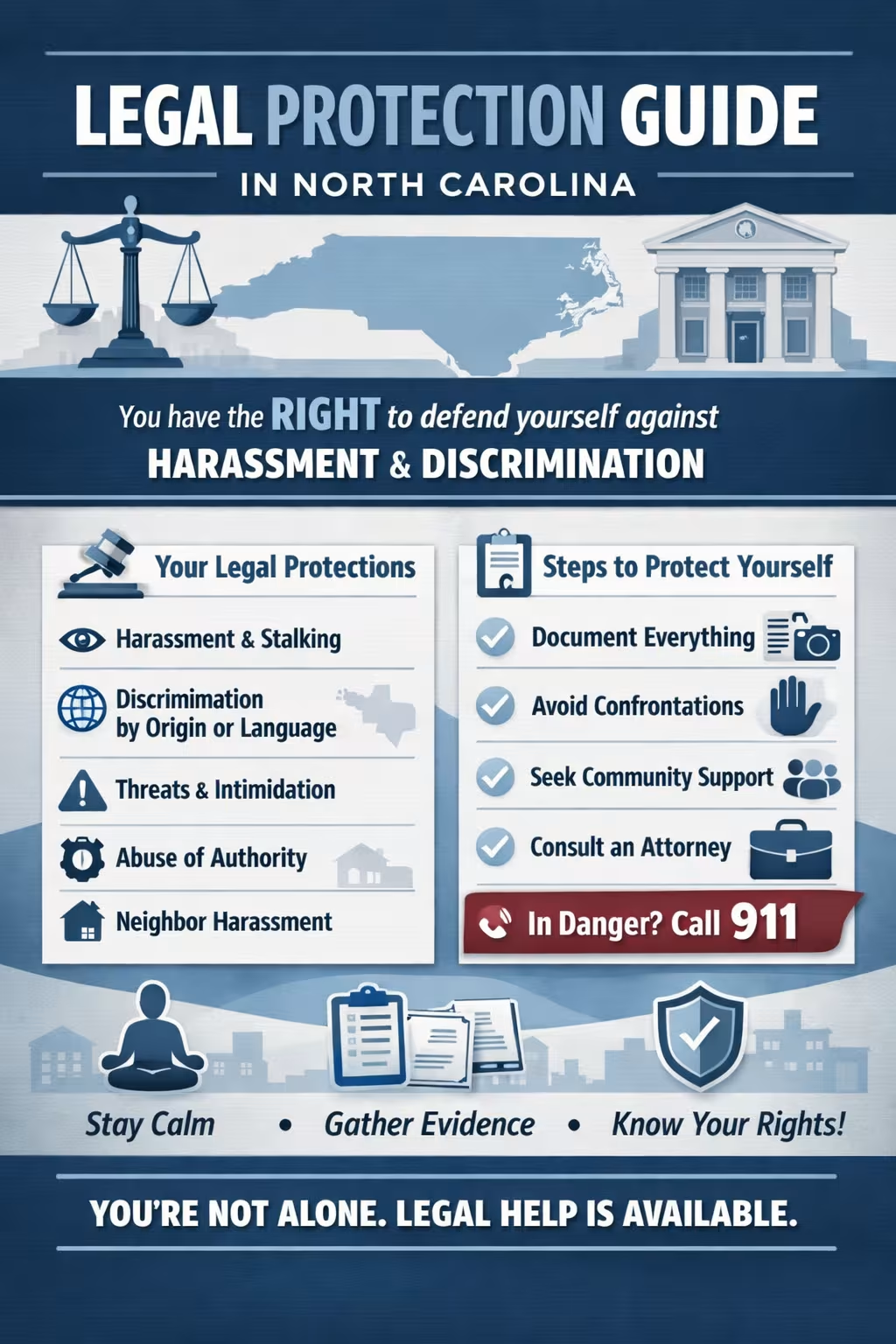
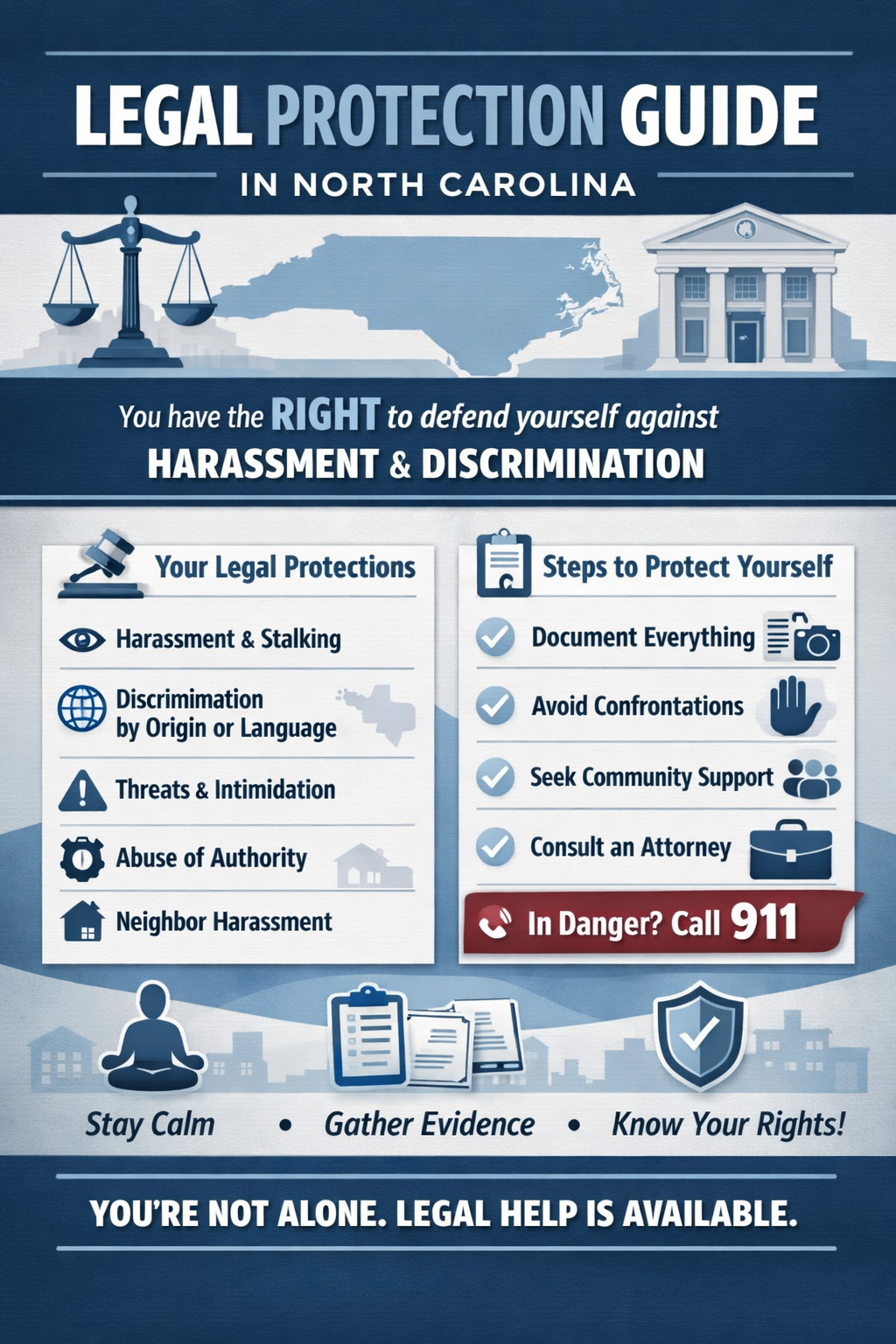
3.1. Document Everything
Evidence is the foundation of any legal action. Keep records of:
- Dates, times, and locations
- What happened and who witnessed it
- Photos, videos, or audio recordings (when legally permitted)
- Hostile messages or written communications
3.2. Avoid Confrontations
The law favors those who remain calm and avoid escalation. Do not:
- Respond to insults
- Engage in physical confrontations
- React to provocations
3.3. Seek Community Support
North Carolina has organizations that assist individuals facing harassment or discrimination:
- Latino community centers
- Civil rights organizations
- University legal clinics
These groups can provide guidance, translation support, and referrals.
3.4. Consult an Attorney
A licensed attorney can:
- Evaluate whether you have a legal case
- Prepare formal complaints
- Represent you before authorities
Legal advice is essential for navigating complex situations safely.
3.5. In Immediate Danger
If you feel physically threatened:
- Call 911
- Request an interpreter if needed
- Clearly state that you feel unsafe
Emergency services are required to respond regardless of immigration status.
4. Can a Person Defend Themselves Legally?
Yes. In North Carolina, individuals are protected against:
- Harassment
- Discrimination based on origin or language
- Threats or intimidation
- Abuse of authority
- Hostile behavior from neighbors
However, for the law to work effectively, you need:
- Strong documentation
- Calm and clarity
- Professional legal guidance
5. Conclusion
Harassment is not something anyone should face alone. North Carolina law provides tools to protect you, but success depends on acting strategically: documenting incidents, seeking community support, avoiding confrontation, and consulting legal professionals. Defending yourself is absolutely possible, and doing so correctly increases your chances of achieving justice and safety.
References
American Civil Liberties Union. (2023). Know Your Rights: Harassment and Discrimination. ACLU.
North Carolina General Statutes § 14-277.3A. (2023). Stalking.
North Carolina General Statutes § 14-277.1. (2023). Communicating Threats.
U.S. Department of Justice. (2023). Title VI of the Civil Rights Act of 1964.
U.S. Equal Employment Opportunity Commission. (2023). Title VII of the Civil Rights Act of 1964.
UNC School of Law. (2022). Immigrant Legal Resource Guide for North Carolina.
Comments