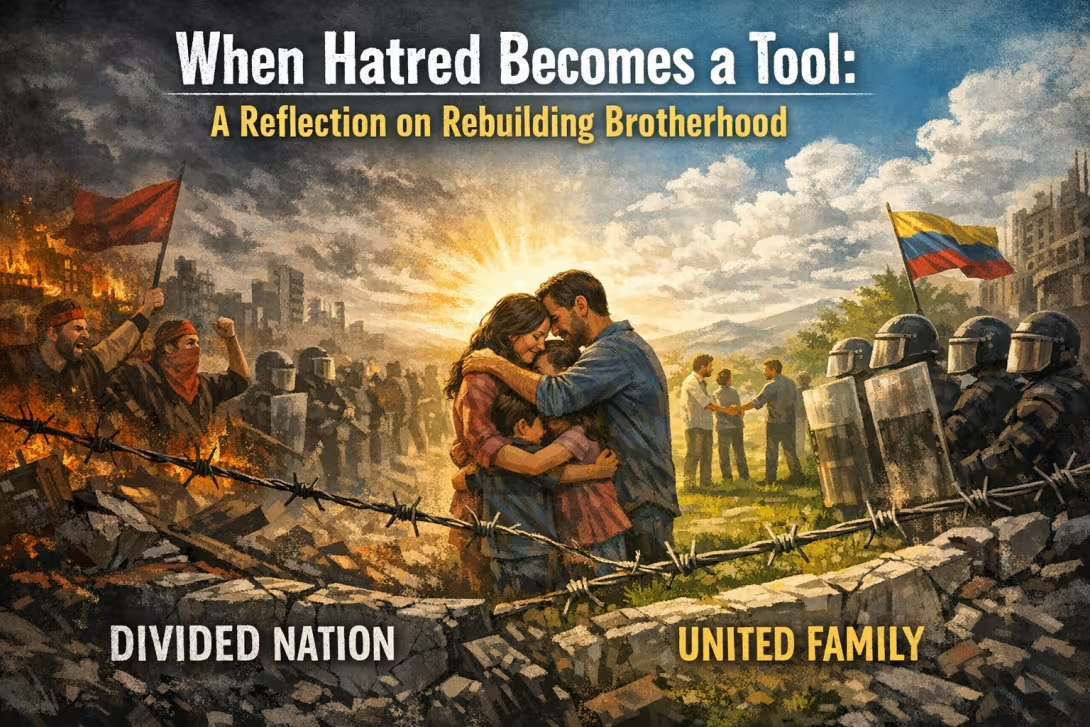
When Hatred Becomes a Tool: A Reflection on Rebuilding Brotherhood
One of the deepest and most persistent problems in many nations is not only political or economic. It is emotional. It is cultural. It is the normalization of hatred as a tool for collective manipulation. When resentment becomes political language, when distrust becomes a social habit, and when identity is defined by opposition rather than coexistence, a society enters a cycle of fragmentation that corrodes everything it touches.
Venezuela offers a clear example of how two opposing sides can, over time, cultivate an antagonism that serves the interests of those who seek to control narratives rather than the needs of the population. This is not about assigning blame. It is about understanding a phenomenon: hatred is effective for dividing, but it is incapable of building.
Hatred as a Mechanism of Control
Hatred has a dangerous advantage: it is simple. It requires no nuance, no analysis, no critical thinking. It only needs a “them” and an “us.” That is why it becomes such a powerful instrument for those who benefit from a fragmented society. When emotions are polarized, conversations become impossible, empathy shrinks, and the capacity to imagine shared solutions disappears.
In that environment, any discourse that promises protection from the “enemy” gains strength. And slowly, the idea of community dissolves into a landscape of trenches.
The Emotional Fracture of a Nation
When hatred takes root, it does not only break institutions. It breaks families. It breaks friendships. It breaks the emotional fabric that holds a country together. The fracture is not abstract; it is intimate and painful.
In Venezuela, as in other nations that have experienced similar cycles, division has reached a point where political identity often weighs more than human identity. Conversations become battlegrounds. Differences become threats.
But no country can sustain itself on that foundation. No society can prosper when half of its people fear the other half.
The Real Solution: Rebuilding Brotherhood
The way out will not come from a speech promising victory over the opposing side. It will come from a cultural shift that recovers something deeper: brotherhood, familiarity, and the ability to recognize ourselves as part of the same story.
Reconstruction begins when we stop seeing the other as an enemy and start seeing them again as a neighbor, a colleague, a fellow citizen. When we understand that diversity is not a danger but a source of strength. When we accept that no nation heals through permanent confrontation, but through cooperation.
Brotherhood is not naïve. It is a strategy for social survival. It is the foundation of any future worth building.
A Country Cannot Heal Through Hatred, but Through Encounter
Hatred divides, but it also exhausts. It produces no solutions. It generates no prosperity. It builds no institutions. It only perpetuates conflict.
Brotherhood, on the other hand, allows differences to coexist without destruction. It allows families to reconnect. It allows society to rebuild its emotional core. It allows a nation to imagine itself again.
Real transformation will begin the moment citizens decide that unity is more valuable than defeating the other side. When familiarity becomes stronger than propaganda. When humanity weighs more than ideology.
On that day, any country — including Venezuela — will finally begin to heal.
Comments