JUST‑IN‑TIME (JIT): PHILOSOPHY, METHOD, AND STRATEGY FOR OPERATIONAL EFFECTIVENESS
1. What is Just‑in‑Time?
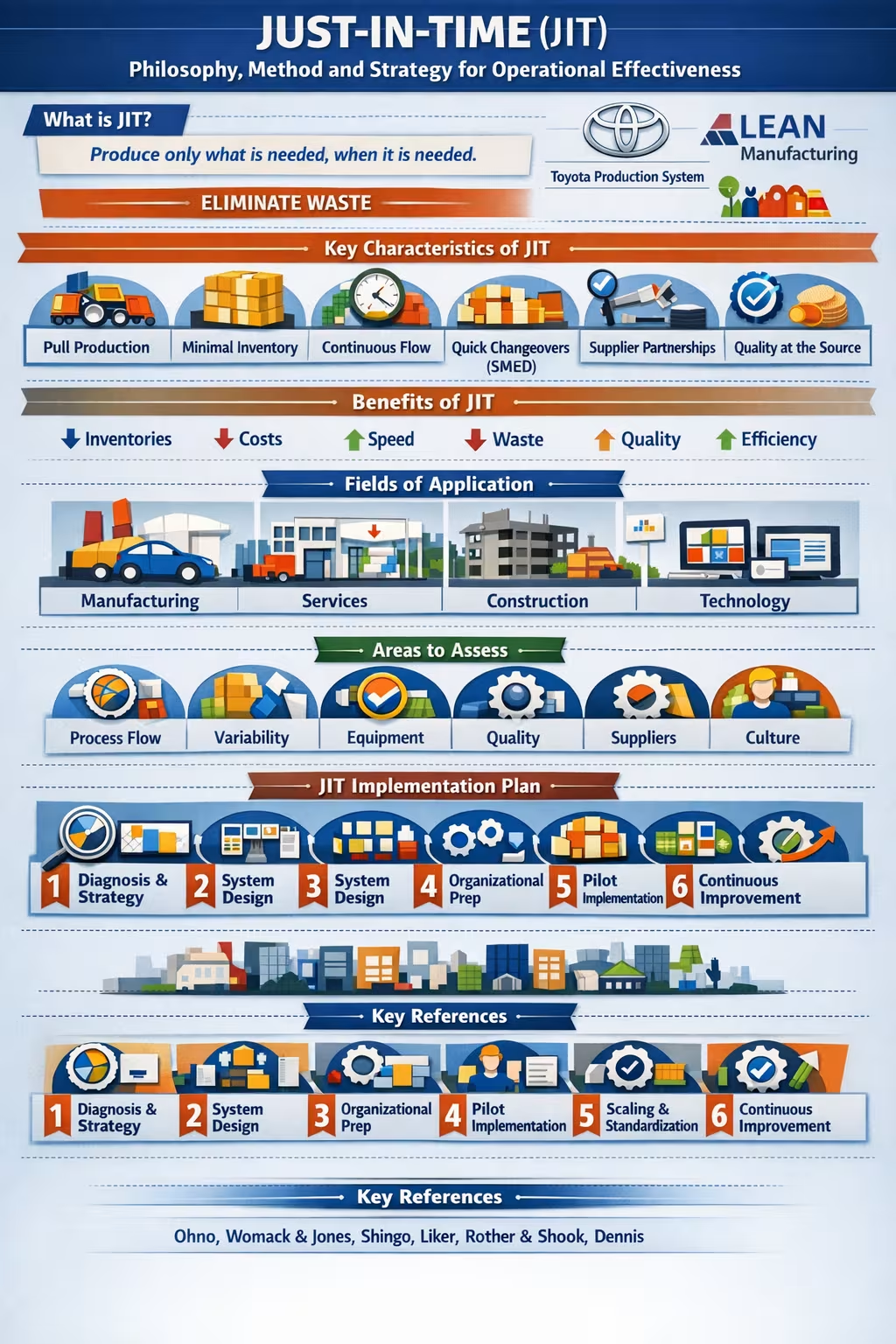
Just‑in‑Time (JIT) is a management and production philosophy that aims to produce only what is needed, in the quantity needed, and at the time needed. Its purpose is to eliminate waste, reduce inventories, shorten cycle times, and synchronize the entire value chain.
Originating at Toyota as part of the Toyota Production System (TPS), JIT became one of the pillars of Lean Manufacturing.
2. Essential Characteristics of JIT
🌟 Pull Production
- Real customer demand triggers production.
- Avoids overproduction and unnecessary batch processing.
🌟 Minimal Inventory
- Reduces raw material, work‑in‑process, and finished goods inventory.
- Inventory is no longer “security” but “waste.”
🌟 Continuous Flow
- Processes are connected without interruptions or waiting.
- Eliminates idle time and unnecessary transport.
🌟 Quick Changeovers (SMED)
- Minimizes setup time to enable small batches.
🌟 Close Supplier Relationships
- Frequent, reliable, and synchronized deliveries.
- Quality assurance from the source.
🌟 Quality at the Source
- Zero defects as a prerequisite for continuous flow.
- Use of Poka‑Yoke, Jidoka, and self‑inspection.
3. Benefits of JIT
✔ Significant inventory reduction
✔ Lower operational and financial costs
✔ Faster customer response
✔ Waste elimination (muda)
✔ Improved product quality
✔ Higher productivity and efficiency
✔ Better supplier and customer integration
4. Fields of Application
JIT applies to any organization seeking flow, synchronization, and waste reduction:
Manufacturing Industry
- Automotive
- Electronics
- Food and beverages
- Pharmaceuticals
- Metal‑mechanical
Services
- Hospitals (supplies, operating rooms, pharmacy)
- Retail (smart replenishment)
- Logistics and distribution
- Industrial maintenance (JIT for critical spare parts)
Construction
- Materials delivered exactly at the point of use.
Technology
- Agile development, Kanban flows, DevOps.
5. Key Areas to Identify Before Implementing JIT
A successful implementation requires assessing:
a) Process Flow
- Value Stream Mapping (VSM).
- Bottleneck identification.
- Cycle time, lead time, and WIP analysis.
b) Variability
- Demand variability.
- Process variability.
- Quality variability.
c) Equipment Reliability
- Availability (OEE).
- Preventive and autonomous maintenance.
- Risk of unplanned downtime.
d) Product Quality
- Defect levels.
- Early detection capability.
- Process stability.
e) Supplier Relationships
- Delivery frequency.
- Reliability.
- Quality and responsiveness.
f) Organizational Culture
- Discipline.
- Standardized work.
- Problem‑solving mindset.
- Lean leadership.
6. JIT Implementation Plan
A robust plan integrates strategy, processes, people, and technology. Below is a model ready for consulting and training use:
PHASE 1: Diagnosis and Strategic Alignment
- Evaluate current flow (VSM).
- Identify waste.
- Analyze inventory and cycle times.
- Assess suppliers.
- Define goals (inventory, lead time, productivity).
- Align with top management.
PHASE 2: System Design
- Define future flow (VSM future state).
- Design manufacturing cells.
- Implement Kanban (pull).
- Reduce setup times (SMED).
- Standardize work.
- Design internal logistics routes (milk run).
PHASE 3: Organizational Preparation
- Train in Lean, JIT, Kanban, SMED, 5S.
- Develop problem‑solving skills (A3, PDCA).
- Build a disciplined, continuous improvement culture.
- Establish supplier agreements for frequent deliveries.
PHASE 4: Pilot Implementation
- Select a representative line or process.
- Execute pull flow.
- Adjust minimal inventories.
- Measure results (OEE, lead time, WIP).
- Correct deviations.
PHASE 5: Scaling and Standardization
- Expand to other lines or areas.
- Integrate with maintenance (TPM).
- Integrate with quality (Poka‑Yoke, Jidoka).
- Integrate with logistics and suppliers.
- Conduct internal audits.
PHASE 6: Continuous Improvement
- Ongoing Kaizen.
- Periodic flow review.
- Adjust to demand and variability.
- Innovate through automation and digitalization.
7. Key References (APA Format)
- Ohno, T. (1988). Toyota Production System: Beyond Large‑Scale Production. Productivity Press.
- Womack, J. P., & Jones, D. T. (2003). Lean Thinking: Banish Waste and Create Wealth in Your Corporation. Free Press.
- Shingo, S. (1989). A Study of the Toyota Production System. Productivity Press.
- Liker, J. K. (2004). The Toyota Way: 14 Management Principles from the World's Greatest Manufacturer. McGraw‑Hill.
- Rother, M., & Shook, J. (2003). Learning to See: Value Stream Mapping to Add Value and Eliminate Muda. Lean Enterprise Institute.
- Dennis, P. (2015). Lean Production Simplified. CRC Press.
- Log in to post comments
Comments